
.avif)
To begin with, it is a good idea to give your baby different pacifiers to try and see which one is their favorite, or if they are interested in pacifiers at all.
Once your baby's preferences are known, it's easier to choose which type of pacifier is right for them.
The shape of the pacifier head
When it comes to the size or shape of the pacifier head, there is no right or wrong option, as all babies are different. Babies have different preferences, different sucking techniques, and different mouth shapes. That's why there are so many different pacifiers available to suit different needs (which of course makes finding the right one tricky..).
You willprobably have to try a few different shapes and sizes with your baby until the perfect fit is found. Some babies are particular about shape, size, and material and some babies will accept any pacifier, regardless of the above considerations.
Here we present 3 different shapes of pacifier heads, which can help you in your choice: round, anatomical and symmetrical. The Bibs pacifier collection includes all three shapes, while all of the Avent pacifier heads are symmetrical, except for their round Avent Soothie.

Round pacifier head
The round-shaped pacifier head resembles the shape and size of the mother's soft nipple, and supports a similar tongue position and suction technique as when breastfeeding. The baby's tongue rises from the sides to lift and put the pacifier head in a cup-shaped position.
Bibs round pacifiers have an air hole that lets air out when your baby closes the pacifier head in his mouth. This ventilation system takes air away from the pacifier head, allowing the pacifier head to deflate and flatten naturally in the baby's mouth.
Due to the air hole, water may also remain in the pacifier after washing and sterilization. If this happens, flatten the pacifier head and squeeze the excess water out of the pacifier with your fingers.
Avent Soothie has a special round shaped pacifier head that you can slip your finger inside to soothe your newborn baby. Thanks to the shape of the Soothie pacifier, no water remains inside after washing.
Check here for Bibs Colour and here for Bibs Boheme pacifiers, both with a round pacifier head. Find the round headed Philips Avent Soothie here.

Symmetrical pacifier head
The flat, drop-like, symmetrical pacifier head helps your baby with achieving proper tongue position and suction technique, where the tongue is flat and pushes the pacifier against the palate. In such a technique, the baby does not have to suck so hard (cf. a round shaped pacifier head) so that the pacifier flattens in the mouth.
The Bibs symmetrical pacifier is a smaller, drop-shaped model, but also has an air hole like the round pacifiers. With the air hole, the pacifier is easily emptied in the baby's mouth, as there is no air left in the pacifier when the baby presses it against their palate. The air hole means that water may remain in the pacifier after washing and sterilization. If this happens, flatten the pacifier head and squeeze the excess water out of the pacifier with your fingers.
Bibs' Supreme and Infinity models have a symmetrical head. You can find them here.
Philips Avent pacifiers all have the same symmetrical pacifier head, except the Soothie pacifier. See Avent's pacifiers from here.

Anatomical pacifier head
In addition to these, there is one more shape of the pacifier head. This one is like the symmetrical pacifier mentioned above, but the pacifier head has a special rising design, allowing the baby to have a good tongue position. The curved pacifier and rising tip support the same suction technique that a baby would have when sucking a nipple, in which both sides of the tongue rise up and the tongue is in a cup-shaped position. The curved pacifier head makes it easier for the baby to suck, as it does not need to be sucked as hard as a round pacifier head to flatten the pacifier in the mouth.
This pacifier from Bibs also has an air hole. With the air hole, the pacifier is easily emptied in the baby's mouth, as there is no air left in the pacifier when the baby presses it against their palate. This also means that water may remain in the pacifier after washing and sterilization. If this happens, flatten he pacifier head and squeeze the excess water out of the pacifier with your fingers.
See Anatomical Bibs Pacifiers from here.
Materials
Most often, pacifier heads can be found in 2 different materials: silicone and natural rubber, that is, latex.
The “shield” of the pacifier is most often made of harder plastic, such as polypropylene, but for a newborn you can also find pacifiers made entirely of soft silicone.
.avif)
.avif)
The pacifier shield
A pacifier shield is usually made of harder plastic and can also have a grip ring for the baby's little hands. The shield may be small or large, covering the mouth more closely, or curving away from the mouth. Some shields have larger cut-outs for ventilation, or more ventilation holes than others. A pacifier made entirely of soft silicone can also be found for newborns.
Shine-in-the-dark shields make it easier to find the pacifier at night e.g. in the baby's bed - no more searching with a mobile flashlight.
FInd Bibs Glow Pacifiers that shine in the dark here and Avent Night pacifiers from here.
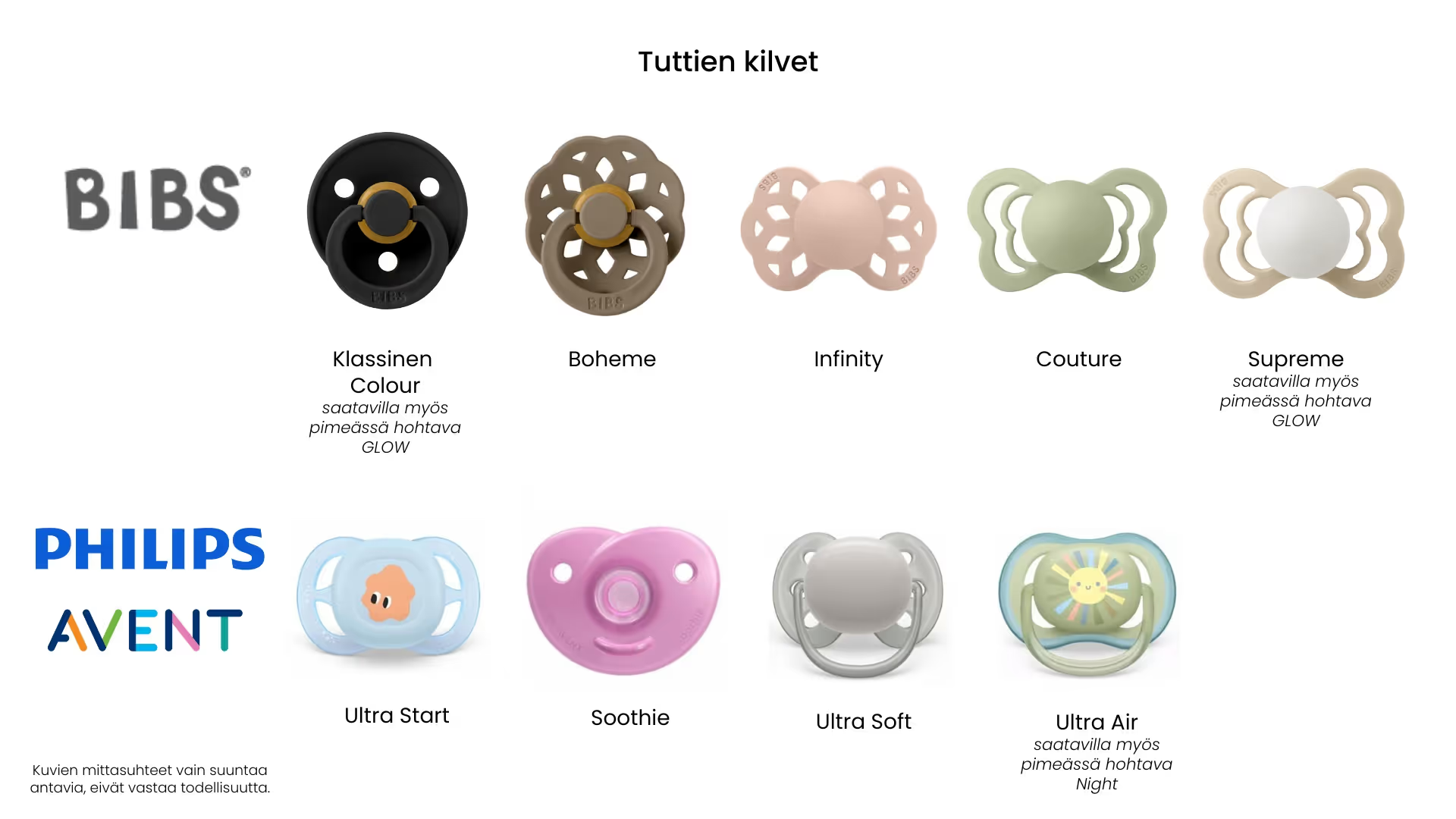
Bibs pacifier shield models:
1. The classic round Colour is the original Bibs pacifier with three ventilation holes and a ring for gripping. The shield is designed to turn outwards away from the delicate skin of the baby's mouth, preventing moisture from accumulating.
Discover Color Pacifiers here. Also as a GLOW model here.
2. Boheme is a round model in the shape of a flower with 16 small ventilation holes and a grip ring for small hands. The shield is designed to turn outwards away from your baby's skin, preventing moisture from accumulating.
Discover Boheme Pacifiers from here.
3. The Infinity model has a butterfly-shaped shield with 7 small ventilation holes on both sides to allow moisture to evaporate from the skin. The same beautiful design as the Boheme model, but wider.
Discover Infinity Pacifiers here.
4. Couture is a butterfly-shaped wide shield with large vents to prevent moisture from accumulating on your baby's skin. Couture comes with an anatomical pacifier that needs to be right way up in the baby's mouth: the wider part of the shields butterfly wings facing upwards.
Discover Couture Pacifiers from here.
5. Supreme is a butterfly-shaped wide shield with large vents to prevent moisture from accumulating. Supreme comes with a symmetrical pacifier.
Discover Supreme Pacifiers here. Also as a GLOW model here.
.avif)
Different shields for Avent pacifiers:
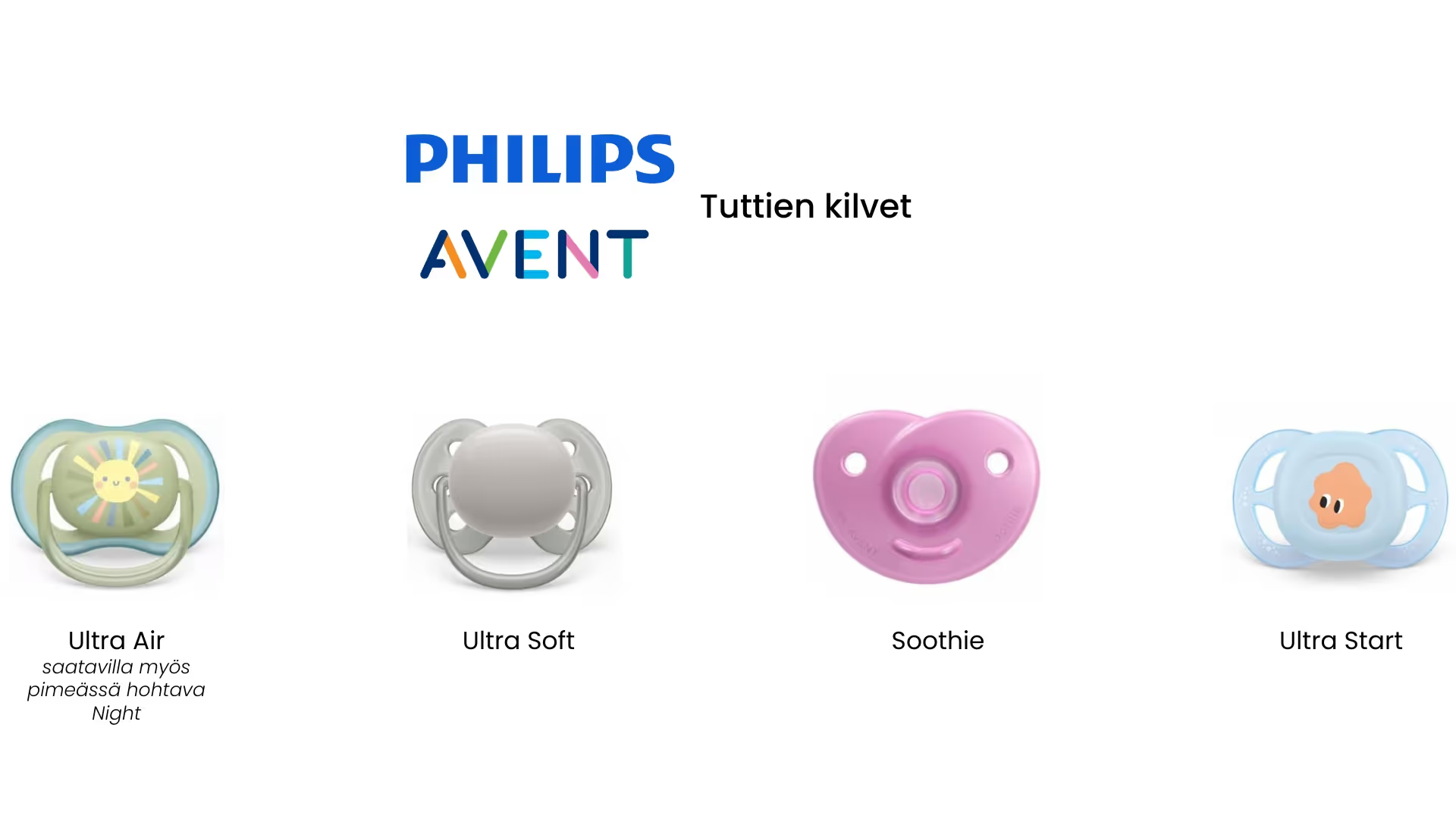
1. The Ultra Air shield has large ventilation holes and lightweight breathable construction for a pleasant skin feel and to prevent moisture build-up. There is also a ring on the shield. Ultra Air is also available as Ultra Air Night model that glows in the dark, as well as a day and night set with 1 shine-in-the-dark and 1 regular pacifier.
Find Ultra Air Pacifiers from here. Discover Night Models from here, as well as Day and Night sets from here.
2. The Ultra Soft shield has a soft, flexible Flexi Fit protection against the skin, which makes the pacifier particularly gentle on the baby's sensitive mouth and skin. There is a ring on the shield.
See Ultra Soft Pacifiers from here.
3. Avent Ultra Start is a pacifier for babies aged 0-2 months, specially developed for the small mouth and face. The elastic shield is gentle on the baby's skin. No ring.
Find Ultra Start pacifiers from here.
4. Soothie is a one-piece pacifier made entirely of soft silicone, designed specifically for newborns and babies under 6 months. The heart-shaped shield won't hit the baby's little nose. No ring. The parent can slip a finger inside the soothie pacifier to soothe their baby.
See Soothie pacifiers here.
What's new: The Avent Ultra collection of pacifiers is being updated with shields made from 80% plant-based, ISCC certified* materials.
The shields and sterilization cases for the renewed collection are made of plant-based material. The soft pacifier head is still 100% silicone.
Read more here on the Avent website.
*International Sustainability and Carbon Certification.
Pacifier size
Regardless of the brand, the size classifications go something like this: a size suitable for a newborn small baby (0-6 months) and a size suitable for a slightly larger baby (6-18 months).
Below are more detailed pacifier sizes by brand.
Bibs Pacifier Sizes
- Size 1: 0-6 months
- Size 2: 6-18kk
- Size 3: 18months +
- Round design only and natural rubber material, Bibs original pacifier
All of the above mentioned options for pacifier heads (round, symmetrical, and anatomical), as well as materials (silicone and natural rubber) can be found in all Bibs pacifiers of all sizes, except the largest size that only comes with a round natural rubber head.
Philips Avent Pacifier Sizes
- 0-2 months
- Ultra Start pacifier, specially designed for newborns (symmetrical)
- 0-6 months
- Soothies (round pacifier head)
- Ultra Soft (symmetric)
- Ultra Air (symmetric)
- 6-18 months
- Ultra Soft (symmetric)
- Ultra Air (symmetric)
- Ultra Night (symmetric)
The Philips Avent pacifier range only has silicone pacifiers.
Cleaning the pacifier
You should always primarily follow the cleaning instructions on the packaging of the pacifiers and sterilization supplies that you are using.
Sterilization of pacifiers in boiling water:
silicone and natural rubber pacifiers
- Wash your hands.
- Place the pacifiers in a bowl and pour boiling water over the top until the pacifiers are covered with water.
- Leave the pacifiers in the water for about 5 minutes.
- Carefully remove the pacifiers and place on a clean kitchen towel to air dry.
- In pacifiers with air hole: Wash your hands and remove excess water from inside the pacifier by squeezing the pacifier head flat.
- Make sure the pacifiers are completely dry before use.
Sterilization of pacifiers in the microwave:
silicone pacifiers only
Silicone pacifiers can usually be sterilized in the microwave, either in a bowl or in a sterilization case.
Refer to the pacifier packaging for detailed instructions on how to sterilize in the microwave. Always follow sterilization instructions on the package of the pacifiers and sterilization supplies you are using.
Remember to let the pacifiers cool before removing them from the microwave and always make sure the pacifiers are completely dry before use.
Bibs pacifiers can be sterilized in the Bibs pacifier case (sold separately), and Avent pacifiers in the sterilization case that they come inside of.
Using the pacifier safely
Safe use of the pacifier requires care.
Here are a few important guidelines:
- Check the pacifier regularly: There should be no holes or cracks in the silicone parts, or other signs of wear. The pacifiers silicone parts can be tested by bending and pulling slightly to expose weak points.
- Sterilize the pacifier regularly: Especially before first use, and during the flu season. Follow the instructions on the package — not all pacifiers should be boiled and some can only be cleaned by boiling.
- Change the pacifier often enough: Materials wear out, and an old pacifier can be a risk. It is recommended to change the pacifier every 1-1.5 months.
- Store correctly: The pacifier should remain clean and intact. Store natural rubber pacifiers out of direct sunlight and make sure that no water remains in the pacifier after sterilization. It is good to have a pacifier case with you on your trips.
And the most important question: What if the pacifier drops on the floor?
Some parents rinse the pacifier under running water, others trust that a little “dust vaccination” will do good, and still others switch to a clean pacifier.
The most important thing is that you act as feels natural to you, and as you have been instructed at the maternity and child health clinic.
Sources:
https://bibsworld.com/blogs/guides/pacifier-nipple-guide
https://assets.presscloud.com/file/52/527935362856092/BIBS_AW24_Pacifiers_USPsheet_A4_EN.pdf
https://assets.presscloud.com/file/52/528871399430723/BIBS_ProductCredibility_Sales_One-Pager_EN.pdf
%20(736%20x%20414%20px)%20(3).png)

%20OIKEA%20(8).jpg)
%20OIKEA%20(9).jpg)
%20(2).avif)